
Shenandoah County Deed Records and What They Show
The Circuit Court Clerk keeps Shenandoah County's land instruments permanently. Among the property records in that vault are deeds, deeds of trust, mortgages, releases, assignments, powers of attorney, and plats. Each name means something different. A deed records a conveyance or other transfer of an interest in land. A deed of trust or mortgage records a security interest instead. A release records a later event affecting that interest.
| Deed Type | What It Does | Common Use |
|---|---|---|
| General warranty deed | Conveys the interest stated in the instrument with the warranties it sets out. | Review the recorded transfer and its legal description. |
| Special warranty deed | States a narrower set of title assurances than a general warranty deed. | Read the actual language and exceptions. |
| Quitclaim deed | Transfers whatever interest the grantor has, if any. | Check the parties and prior title references. |
| Trustee or fiduciary deed | Records a transfer made by a trustee or estate fiduciary. | Cross-check the related trust or probate file. |
| Deed of trust / release | Records security for a debt, or a later release of that record. | Match a release to the original instrument. |
The instrument name is only a starting point. A deed may state parties, consideration, and a property description, but the exact terms live in the filed image. One caution matters here. A mortgage or lien entry does not itself show a later release, so locate the separate satisfaction or release and confirm it references the same property and the original filing.
The Shenandoah County Grantor-Grantee Index
Virginia's Secure Remote Access land-record system is the online route the Clerk names for Shenandoah County deeds. It is known as SRA or COVERS. A grantor transfers an interest. A grantee receives it. Search by party name and recording date where those modes are offered. Then check the instrument type and reference before opening a result. The county page leaves the Shenandoah online start year, the local field list, and the image price unstated. Confirm those details with the office directly.
- Start with the current owner name as grantee and find the latest conveyance that matches the parcel description.
- Record its grantor, date, instrument type, and book/page or document reference exactly as shown.
- Search the grantor as a prior grantee to locate the deed by which that party acquired the tract.
- Repeat only as far as the index can be verified; for older entries, move to the clerk or historic catalog.
- Grantor
- The party named as making the transfer or grant.
- Grantee
- The party named as receiving the interest.
- Chain of title
- The sequence of recorded transfers tied to a parcel.
- Book and page
- A volume and page reference used in older land records; follow the exact reference on the result.
Getting a Copy of a Shenandoah County Deed
The statewide SRA description says index-only access may be free when a clerk enables it. Images are another story. The local Clerk may require a subscription before an image opens. A signed agreement and applicable charges may also apply. The office publishes no current certified-copy or page-copy fee, so ask before relying on an online image or driving to the courthouse. Confirm what payment or identification is required.
At the counter, staff guide access to public files. The office sits at 112 South Main Street in Woodstock. It is open weekdays from 9 a.m. to 5 p.m.; call 540-459-6150. A written request should identify the parties, parcel, document type, approximate recording date, and book/page reference if known. Virginia FOIA generally calls for a response within five working days, though clarification, extensions, exemptions, and reasonable search or copy costs may apply.
Recorded, not guaranteed. The Shenandoah County deed index shows filed instruments, not every possible interest. A title search requires a complete legal review and is not replaced by a name lookup.
Virginia SRA Images and Index Access
The online index and an instrument image are separate access steps. Virginia describes public land-record access under its secure remote access system, but a county clerk controls whether local index or image access is enabled. For Shenandoah County, the Clerk's page does not publish a start year or exact image price. If the index shows a result but the image is unavailable, record the result details and contact the office rather than assuming the document was never recorded.
The Virginia SRA/COVERS portal is the statewide entry point. The Shenandoah County Clerk page identifies the local custodian, instrument classes, and counter schedule.
The Virginia SRA/COVERS portal shown below is the statewide land-record index entry point. A local Shenandoah result may expose different fields or access controls.
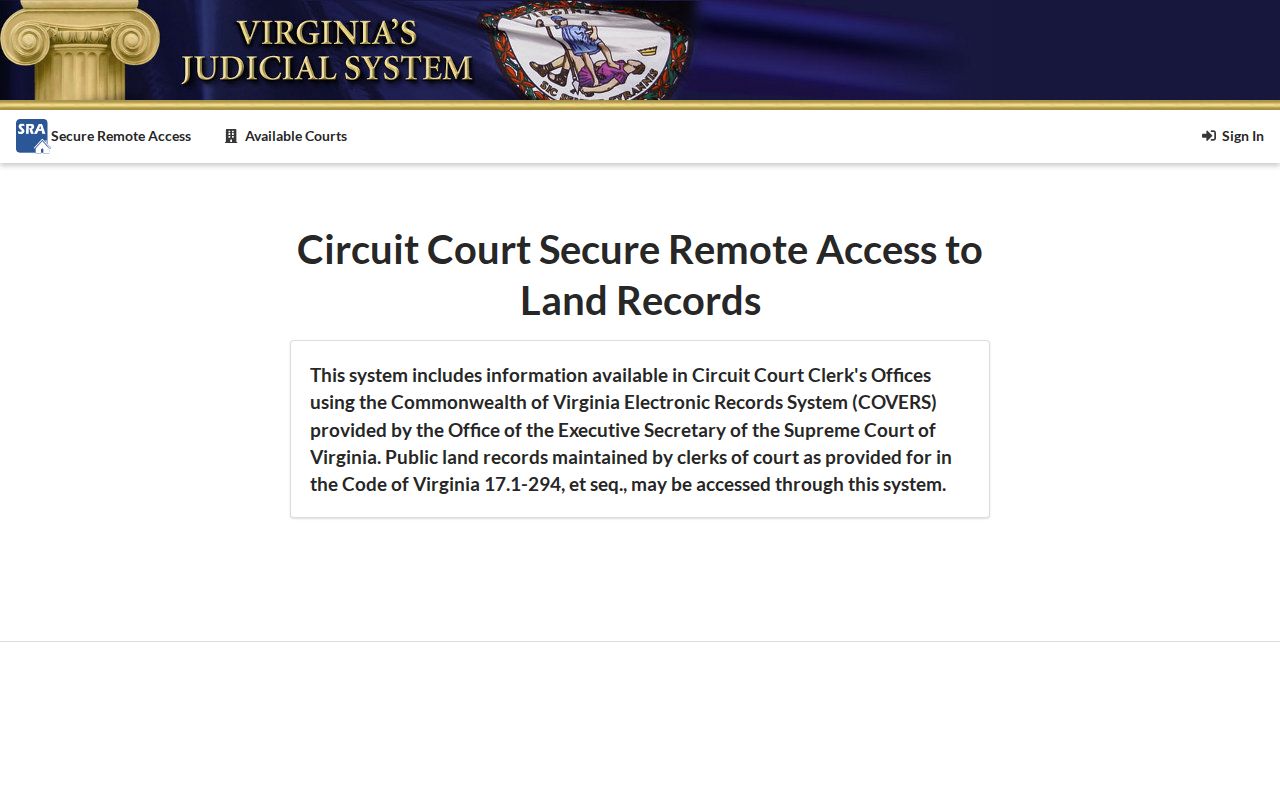
Treat the SRA result as an index clue. When the local image is gated, confirm the document or a copy with the Clerk.
Shenandoah County Historic Deed Books
The Library of Virginia's Shenandoah County microfilm catalog reaches back centuries. It lists general deed-index runs from 1772 through 1921. Deed books DD through ZZ cover 1824 to 1852, and numbered books run through at least 1911. Release deeds for 1883 to 1919 appear there too. So do surveyor books starting in 1785 and county court papers from 1787. Remember, the catalog is a finding aid. It does not promise that every item exists as a web image you can view.
The general deed index splits into five periods. They run 1772-1820, 1820-1852, 1852-1884, 1884-1899, and 1900-1921. Pick the volume covering the likely recording date. Then follow the grantor or grantee entry to its book and page. If the transfer date is unclear, search neighboring periods and expect a deed recorded after the event it documents. A catalog hit is a route to the original series, not a promise that the whole file is digitized.
Chain work on older parcels usually starts with a name in the general index. From there you chase the deed book and page to the record itself. The Circuit Clerk reports that permanent records are microfilmed on a continuing basis. They are stored securely at the State Library in Richmond. Shenandoah County Library's Shenandoah Room and Truban Archives offer local research help. FamilySearch catalogs an abstracted first deed-book volume. Treat any abstract as a clue. Always verify against the original record.
When you request a volume or image, give the Clerk both parties' names, the approximate year, the index entry, and any book-and-page reference. Say whether you want an ordinary viewing copy or a certified instrument. The copy route and price can differ. For an older item, ask whether the record sits locally. Also ask whether the microfilm catalog points to a State Library copy. The local office publishes no complete online coverage cutoff and no fee table.
The LVA Shenandoah County microfilm catalog lists the deed, release, surveyor, and court-paper runs.
The Library of Virginia's Shenandoah catalog helps explain why a modern portal is only one part of the county's property records trail.
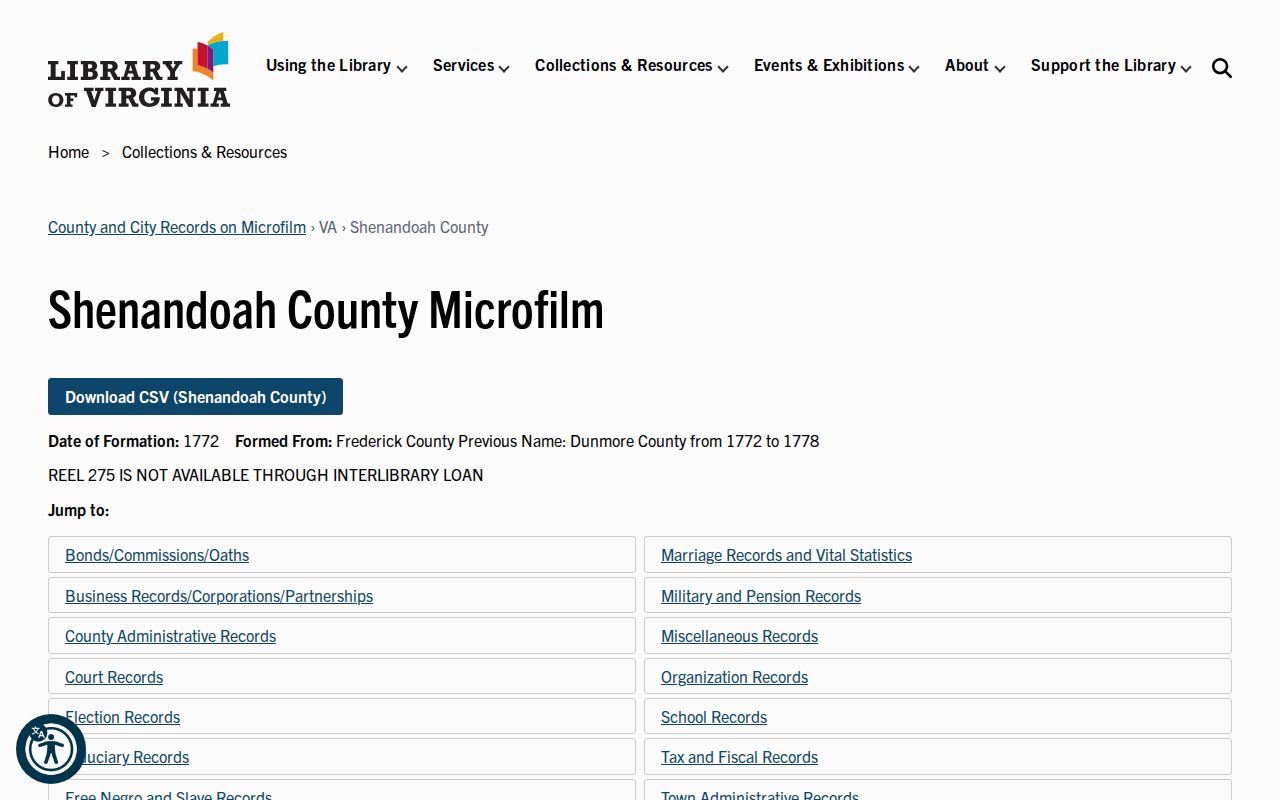
Use the catalog's collection details to plan your next step. That may be a clerk request, a library visit, or a State Library microfilm order for the actual volume.
Probate Deeds and Fiduciary Transfers
A transfer after death can surface in several instruments. The deed may come from a will admitted to probate. It may also come from an executor or fiduciary deed, a court order, a partition, or a deed made during the owner's life. Shenandoah's Clerk preserves wills and fiduciary qualification files. To locate a file, gather the decedent's name, approximate death date, estate name, and fiduciary. Add a property or tax map description.
A will can name heirs and describe the land. Still, the later recorded fiduciary deed or court instrument is the document to check. It shows the actual transfer. VDH serves as the statewide custodian of death certificates. Current certificates require an eligible requester, ID, and a $15 fee. Records generally open after 25 years subject to a court order or statute. A letter of qualification comes from the circuit court where the decedent lived. It does not come from VDH.
Releases, Liens, and Assignments
Not every encumbrance rides along with the deed. A deed of trust, mortgage, mechanic's lien, judgment lien, easement, right-of-way, restrictive covenant, or tax claim can sit in its own instrument. Search party names and recording references, not just the street address. An assignment swaps the named lender or beneficiary. A modification changes terms. A release or satisfaction addresses an earlier filing. Match the legal description and original reference before treating a release as tied to the right parcel.
Virginia SCC's CIS also searches UCC and federal tax-lien filings by debtor name or file number, with PDF images for filings since October 1, 2003. A UCC filing is not automatically a real-estate lien. Verify its connection to the property, and ask a title professional about its legal effect. The Virginia SCC UCC search page explains its official debtor-name and file-number route.
Tax Sale Instruments in Shenandoah
Shenandoah County holds its tax sales in spring and fall. The next date is listed as to be announced. The venue is the Government Center meeting room at 600 North Main Street in Woodstock. A sale list goes out about three weeks before the auction. Anyone who submits contact information to the special counsel named by the county can receive it. Court confirmation matters here. A former owner may petition within 90 days after confirmation in limited circumstances.
Trace the Circuit Court file and land records for the sale notice, the confirmation, and any later instrument. Sale proceeds pay the delinquent taxes. Yet a purchaser may still owe a balance, recording charges, costs, or a buyer premium. The county Land Sales page gives current sale terms. To move from one deed to the next among prior owners, see the Shenandoah County former-owner chain.