
What Shenandoah County Property Tax Records Show
Three documents do most of the work here. The assessment roll, the tax inquiry, and the annual real-estate book each capture one slice of a property tax record. Each captures one slice of a property tax record. Virginia law requires assessment at 100% of fair market value. The Commissioner of the Revenue's figure drives local taxation, while the Treasurer's account shows what was billed and what was paid. The Commissioner's figure drives local taxation. The Treasurer's account shows what was billed and what was paid. Shenandoah County property tax records can also carry town or sanitary district billing, and those charges deserve a separate look. Those charges deserve a separate look.
| Field | What It Shows | Where |
|---|---|---|
| Assessed value | County value at the required 100% fair-market-value level. | Commissioner of Revenue assessment roll. |
| Land and improvement | Separate components that add to the total value when both are listed. | 2026 real-estate book and assessment detail. |
| Tax ticket | Payment history and yearly real-estate tax account information. | Treasurer e-Treasurer inquiry. |
| Due dates | Two half-year installments for county real-estate bills. | County Treasurer and tax page. |
| Town or sanitary district | Separate locality or district charge may apply. | Tax ticket and district labels. |
An assessed value is a mass-appraisal number built for taxation. It is not a private appraisal and not the last sale price. The 2026 book lists each property's owner, description, land and improvement amounts, total, tax, account, acreage, and district. A vacant tract may simply show no improvement amount. What the book cannot do is trace a complete sale-price history or predict what a buyer would pay today.
Looking Up a Shenandoah County Tax Bill
The public real-estate inquiry offers three ways in: Name, Account Number, and Parcel Number. Name mode takes a last and first name. The selection screen may list several matches to pick from. Account and parcel modes use the number printed on the bill or the assessment record. Every mode accepts an optional projected date. It calculates penalty and interest through the date chosen. Skip that field and the inquiry defaults to the current date.
| Inquiry field | Entry | Required or optional | Result path |
|---|---|---|---|
| Name | Last Name and First Name | Search key | Name Selection, then account history and detail. |
| Account Number | Taxpayer account number | Search key | Payment history and ticket detail. |
| Parcel Number | Parcel reference | Search key | Real-estate account for the parcel. |
| Projected Date | Date for penalty and interest calculation | Optional | If blank, system uses the current date. |
- Choose Name, Account Number, or Parcel Number using the key printed on the county record.
- Enter the party or number and add a projected date only when you need a calculation for a future day.
- Select the matching account, open Payment History, and use Detail for the ticket screen.
- Compare the account's property and district description with the assessor record before acting on a balance.
- Assessed value
- The county's tax valuation of land and improvements.
- Tax rate
- The amount applied per $100 of assessed value for the applicable locality or district.
- Tax ticket
- The Treasurer's account view for amounts due and payment history.
- Relief application
- A separate filing for an eligible elderly or disabled owner under county rules.
Appealing a Shenandoah County Assessment
The Board of Equalization hears assessment appeals by appointment. An owner presents the evidence: a factual correction, comparable sales, current listings, a licensed appraisal, or proof of inequity. The Board then affirms, increases, or decreases the assessment. The live appointment page and the reassessment notice are the places to confirm current dates.
Appeal window. Shenandoah County hearings require an appointment, and the available pages do not establish a single deadline for every case. Confirm the current schedule with the county before filing.
Shenandoah County's 2026 Reassessment
Shenandoah County's last general reassessment took effect January 1, 2022. Vision Government Solutions handled the new one. Its values became effective January 1, 2026. The county reports that notices went out in batches beginning December 10. A jump in the number is not automatically an error. Compare the new assessment against the old value. Check the property description and the supporting facts first. The county reassessment page explains the review and evidence process in detail. Check it for the local timetable before starting an appeal.
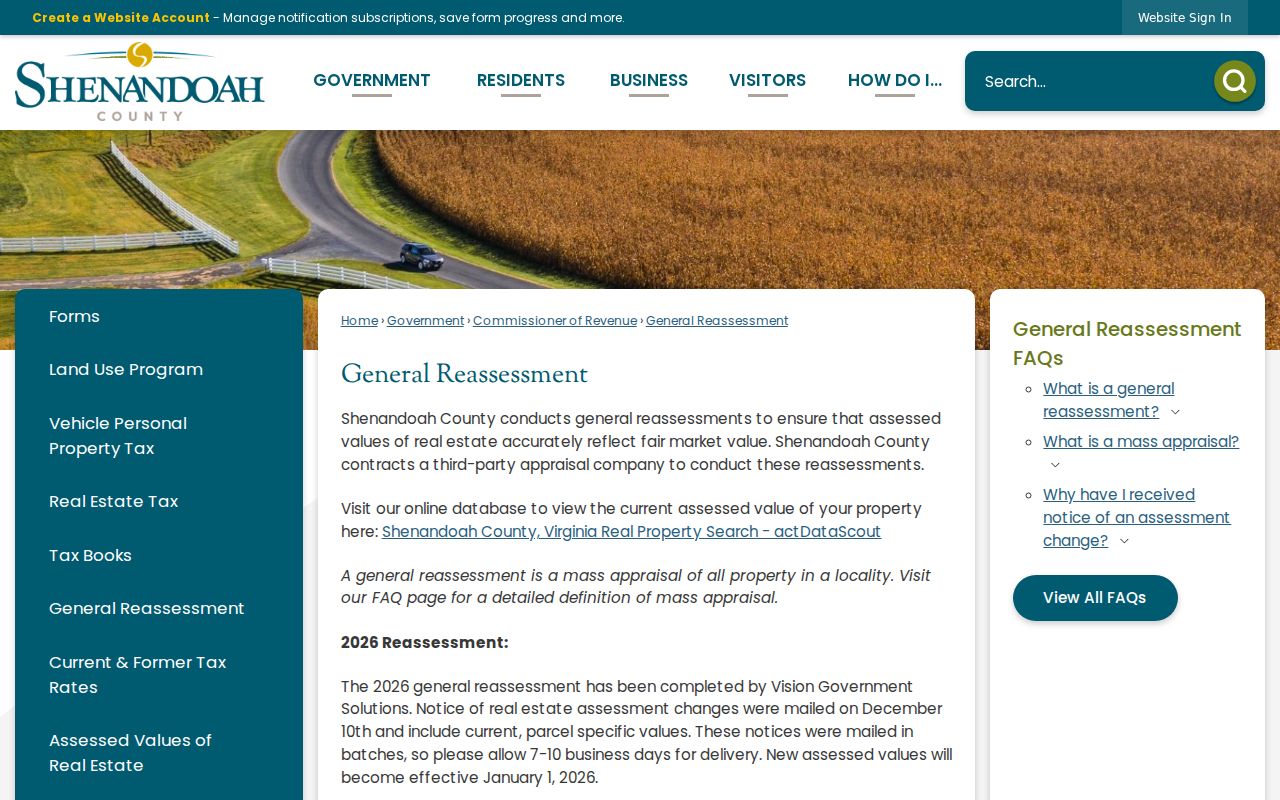
The image reflects the county's official reassessment source rather than any parcel-specific value or fixed schedule.
Half-Year Tax Due Dates
County real-estate bills run on a semiannual cycle. One half comes due June 5. The other half is due December 5. The 2026 assessment book sample shows a county rate of .4800 with half-year amounts on some entries, which helps explain the account layout, though rates and balances should be checked against the current ticket since each tax year and locality can differ.
The Treasurer's system keeps inquiry and payment apart. Its landing page organizes real-estate payment methods by Department/Ticket Number, Parcel Number, Name, or Account Number. A payment-history screen confirms past activity, but it will not supply a parcel's land description or market value. The county e-Treasurer page is the landing point for both inquiry and payment.
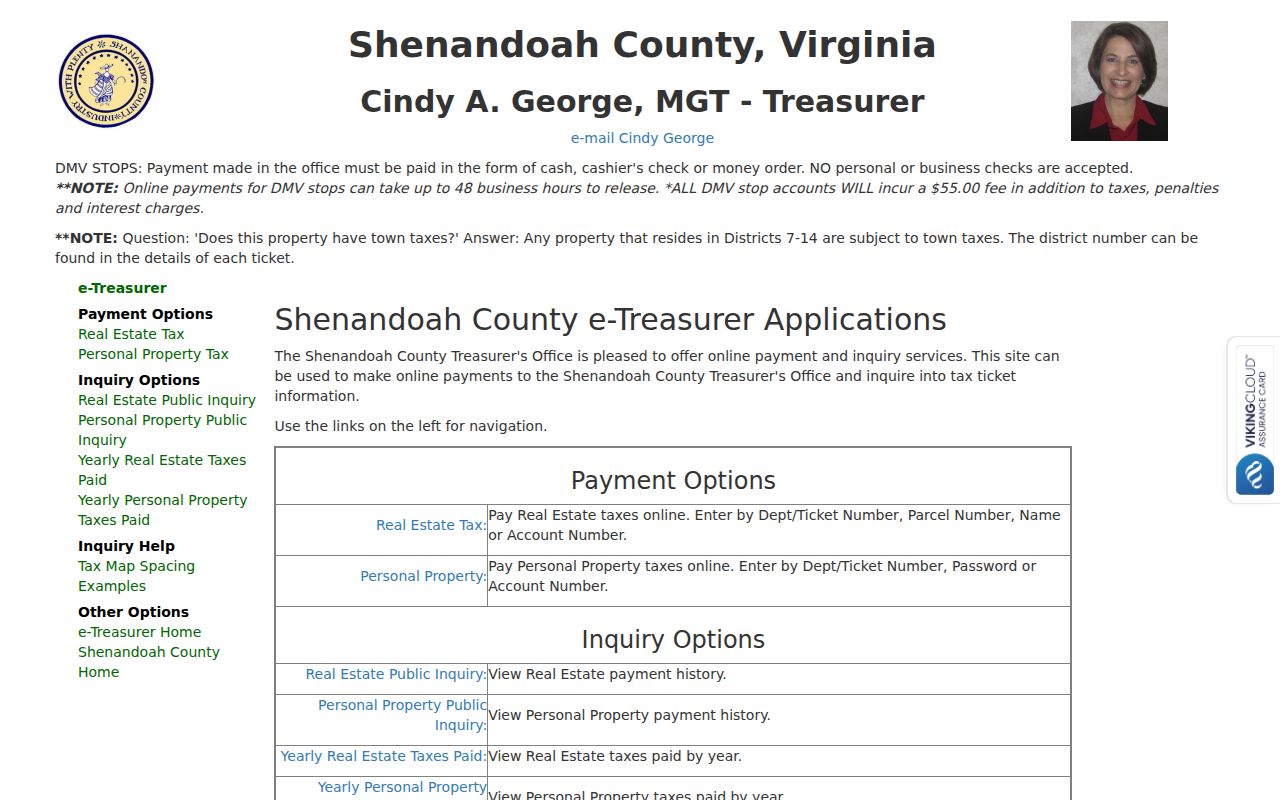
Confirm payment options and current amounts for a specific tax ticket on the live account screen.
Elderly and Disabled Tax Relief
Elderly and disabled relief in Shenandoah County runs on its own application. Title must be held on January 1. Income and net-worth tests apply. Filing is annual, with a March 1 date. The county applies a maximum exemption schedule. Take exact thresholds and amounts from the current county form. Do not infer them from an older account or a neighboring locality's rule.
An approved application says nothing about who actually lives at a property. It concerns eligibility under that program alone. It does not establish current occupancy or a new ownership transfer. False claims may be misdemeanors under the county's stated rules. The Commissioner of the Revenue supplies the current application and can list any supporting documents needed.
Keep the program dates straight. The January 1 ownership test and the March 1 filing deadline belong to this relief program only. They do not apply to assessment appeals, tax-payment due dates, or any promise that a prior year's exemption carries forward. The current income ceiling, net-worth ceiling, and maximum dollar amount come from the present county application. If a title change or account correction is still in process, ask the Commissioner how it affects the application rather than relying on an older roll entry.
Town and Sanitary District Charges
A Shenandoah County parcel inside one of the six incorporated towns can be billed twice. The town issues its own real-estate bill, and the county issues its own. Two sanitary districts add a separate charge for property records in their service areas. They are Stoney Creek and Toms Brook-Maurertown. District labels appear on the tax-ticket detail. That detail explains why one property's total differs from a neighboring parcel's account.
A postal city name does not prove town limits. Check county GIS and town zoning for the geography. Then let the tax record confirm which locality or district sits on the account. Town rates change. Use the current county tax page for the listed year instead of carrying an old bill forward.
Board of Equalization Evidence
The Board of Equalization hears cases by appointment. It can reopen a record once the owner presents evidence. Factual corrections and comparable sales work as evidence. So do current listings, a licensed appraisal, and inequity proof. Tie every item to the parcel and the valuation date. A broad claim that values rose across Shenandoah County proves little. It does not show one property's data is wrong.
The county BOE page explains appointments and access. Treat it as the starting point for the hearing route. Confirm the current schedule before assembling any filing.
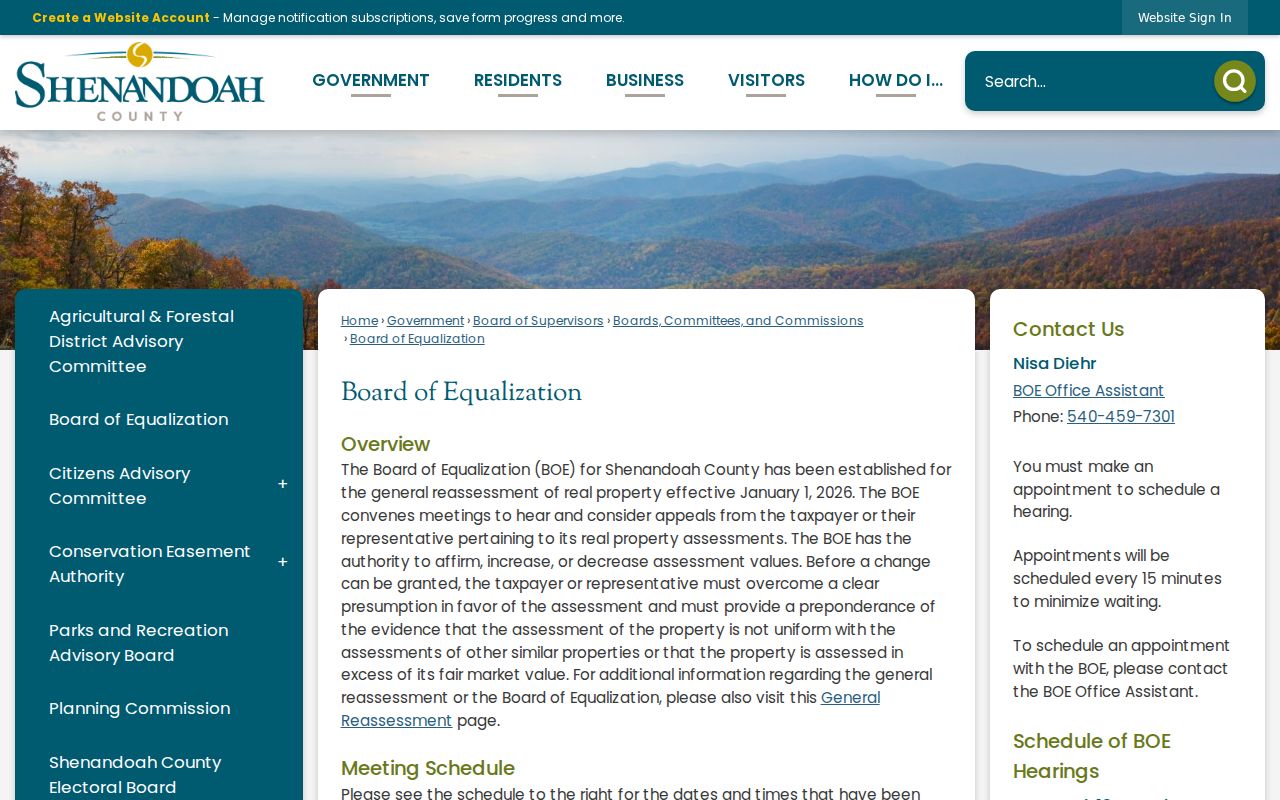
Appointment information is not a decision on any single assessment. Keep the property facts and evidence distinct from the tax-payment history.
Tax Sale and Delinquency Records
Land can sit delinquent for three years or more. The Shenandoah County Treasurer notes that added costs can follow. Tax sales usually run in spring and fall. The county posts the next date once known. A sale list goes out roughly three weeks before the auction. Anyone who gives contact information to the special counsel can receive it. Rely on the official notice for timing, not a stale list.
Keep the bill apart from the land-sale process. The e-Treasurer history shows charges and payments on the tax roll. That notice covers a parcel headed to auction. A delinquent flag alone hides some details. It may miss court costs, sale status, or redemption issues. Match the parcel number on the notice first. Then confirm the latest payment has posted before contacting the Treasurer or special counsel.
An auction purchase brings payment, recording, and court-confirmation steps. The buyer may owe the remaining balance, recording fees, costs, and sometimes a buyer premium. A former owner may petition within 90 days of decree confirmation in limited circumstances. The live county page lists venue, payment options, and purchaser rules. The county Land Sales page is the official source for current tax-sale information.
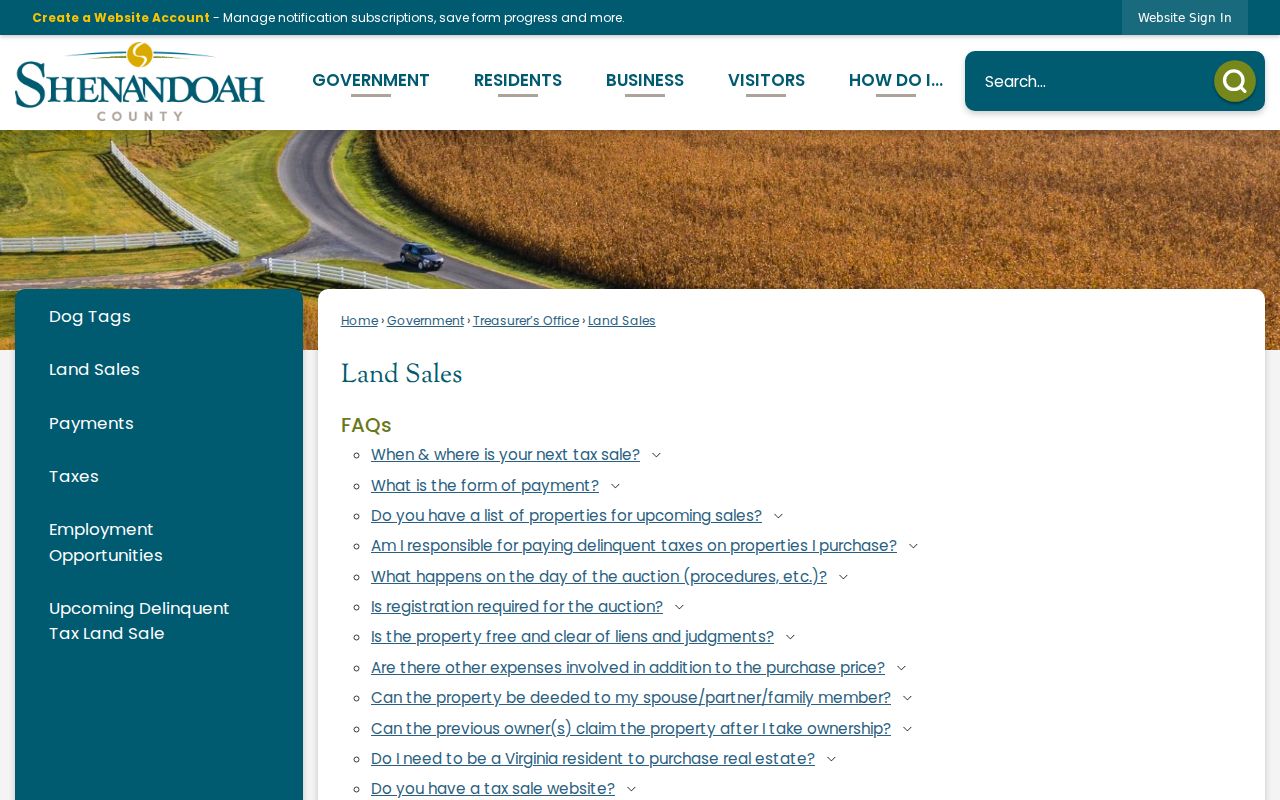
Confirm dates and conditions on the live page before acting on a distressed-property notice.